
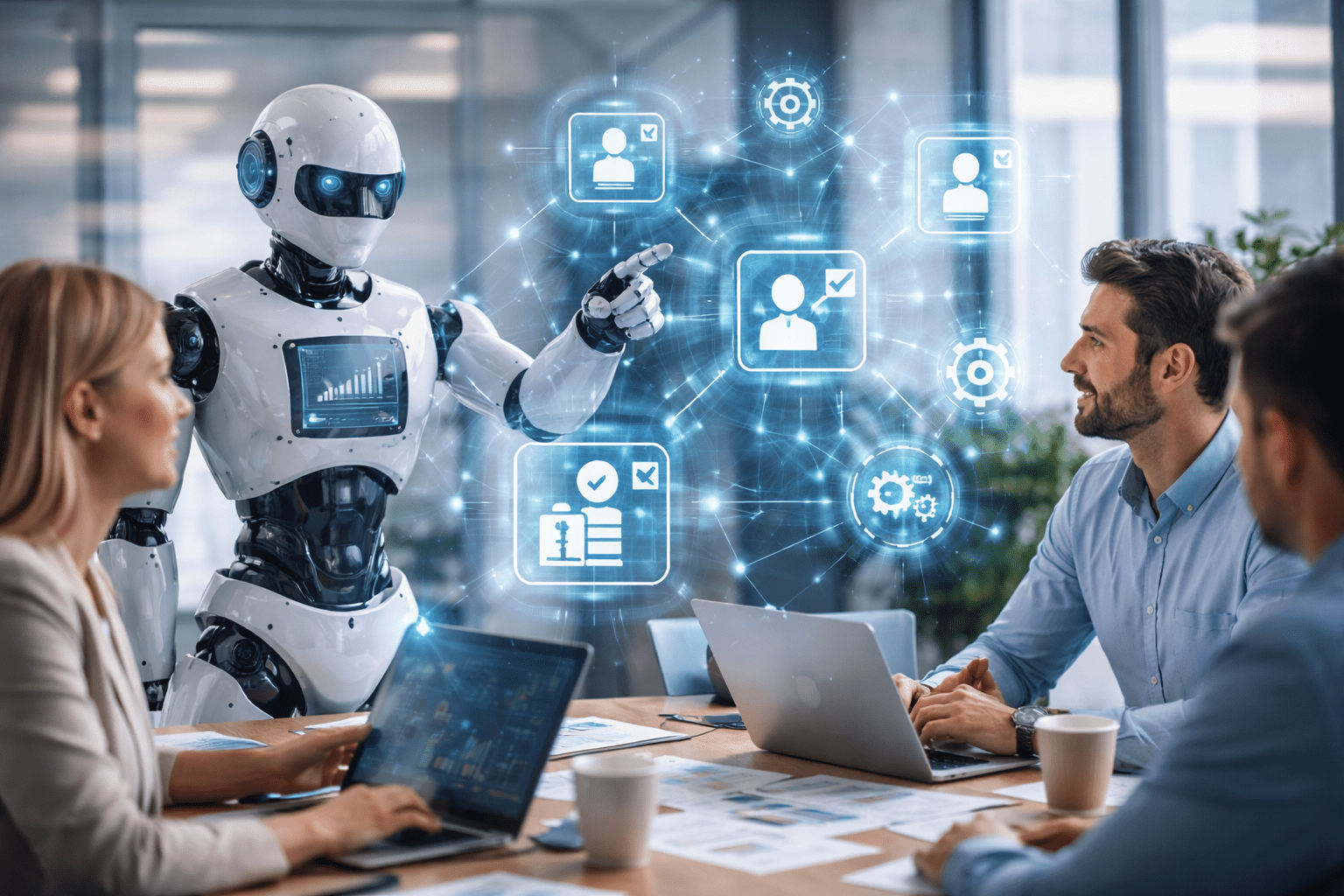
The End of HR as We Know It? How AI is Revolutionizing the Field
In a rapidly changing world, Artificial Intelligence (AI) is making its way into every facet of business, including human resources (HR). But while many companies are under pressure to integrate AI into their operations, the real challenge lies not in the technology itself but in how HR adapts and evolves to manage the shift. For HR professionals, this presents an opportunity—and a potential identity crisis—as AI tools begin to take on roles traditionally filled by humans.
Josh Bersin, a renowned expert in workforce transformation, recently discussed how HR functions are being reshaped by AI. According to him, the future of HR isn’t just about adopting AI technologies; it’s about reimagining the role of HR entirely. As more companies embrace AI to improve productivity and reduce costs, HR must pivot its approach and become a strategic enabler of this technological shift.
The Pressure to Automate and Reduce Headcount
The rise of AI is not just about improving efficiency—it’s about cutting costs and improving productivity. Bersin highlights that many CEOs and CFOs are urging HR to use AI to automate tasks and reduce headcount. While AI is often touted as a tool for growth and scale, the reality is that its use is often driven by the desire to downsize operations and cut unnecessary roles.
Bersin explains that this situation is rooted in how businesses manage human resources. Traditionally, companies have been sloppy in hiring, allocating resources, and managing work. Managers, rather than being incentivized to improve productivity, have been rewarded for increasing headcount, leading to bloated teams and inefficient operations. The result: a massive number of employees performing redundant tasks, with no clear structure or consistency to the work.
AI and the Future of Work Design
Bersin emphasizes the need for a radical shift in work design. Instead of continuing to “bulk up” teams and hiring more people for increasingly specialized tasks, companies need to rethink how they structure their teams and processes. This is where AI can make a significant impact, but only if organizations move beyond just adopting AI tools. They need to re-engineer workflows, focusing on automating repetitive tasks and using AI to streamline operations.
For example, many companies still rely on outdated business models like call centers or extensive support teams that could easily be replaced by AI agents. But AI’s impact won’t stop there. As businesses adopt high-powered AI tools, they will need to reconsider everything from staffing to training. AI’s ability to automate tasks like recruitment, employee training, and performance management could make many HR roles obsolete, forcing the function to evolve.
AI’s Role in HR: A Paradigm Shift
HR departments, traditionally tasked with hiring, training, and supporting employees, now face a crucial challenge: how to integrate AI in ways that maintain a human touch while boosting efficiency. As Bersin points out, HR professionals need to stop focusing on administrative tasks and instead use AI to support higher-level, strategic functions. AI can be used to assess skills, improve employee training, and even streamline the recruitment process—functions that are traditionally time-consuming and resource-heavy.
AI-powered systems like talent intelligence platforms or sourcing systems are already making waves in the HR space, allowing companies to better target and hire top talent. For example, companies like Chipotle have already adopted AI-based recruitment systems, automating the complex hiring workflow. This not only saves millions but also improves the speed and quality of hiring, a process that can be slow and inefficient when handled by humans.
The Sunk Cost Fallacy: The Reluctance to Change
Despite the clear advantages, HR’s role in adopting AI is fraught with challenges. Bersin explains that the sunk cost fallacy—the tendency to stick with past decisions due to previous investments—plays a significant role in why many HR departments resist change. Many companies have already invested heavily in their current HR infrastructure, and the thought of abandoning these systems for AI-driven alternatives is daunting.
However, Bersin argues that this reluctance is ultimately counterproductive. HR departments that don’t embrace AI will find themselves left behind, as competitors move forward with more efficient, data-driven HR operations. AI, with its ability to analyze massive datasets, can help HR professionals make more informed decisions about talent, performance, and organizational development.
HR’s New Role: Strategic Advisor and AI Manager
So, what does the future of HR look like in a world dominated by AI? Bersin argues that HR professionals will need to transition from traditional administrative roles to strategic advisory positions. They will be responsible for managing AI systems and using data to drive business decisions. Instead of focusing on the day-to-day logistics of employee management, HR will help businesses leverage AI to achieve broader organizational goals.
As AI takes over more transactional HR tasks, HR professionals will have the opportunity to focus on the more nuanced aspects of their role, such as employee experience, organizational culture, and leadership development. These are areas where human expertise and empathy are irreplaceable, and where AI can provide valuable support but not replace the human element entirely.
AI’s Impact on HR: A Necessary Transformation
The future of HR lies in reinvention, not just transformation. As companies continue to integrate AI, HR departments must rethink how they operate, shifting from traditional workflows to AI-enhanced processes. This shift won’t be easy, and it requires HR professionals to be proactive in adopting new tools and techniques that can improve productivity while maintaining a human-centered approach.
Bersin stresses that HR professionals shouldn’t wait for external vendors to design the AI tools they need. Instead, HR must take the initiative to redesign its own processes, working closely with IT teams to implement AI systems that will transform the way HR operates. By doing so, HR can stay ahead of the curve and help businesses thrive in a new era of AI-powered work.
Conclusion: Embracing the AI Wave
As AI continues to reshape the workplace, HR departments must evolve to keep up with these changes. The key to success lies in rethinking HR’s role within organizations, moving from administrative tasks to strategic leadership. With AI, HR can become a true enabler of business growth, driving productivity, improving employee experiences, and fostering a more efficient and scalable workforce.
HR professionals must embrace the AI wave and lead the charge in reinventing their function. This is an exciting time for HR, as AI provides the tools to unlock new potential, but it’s up to HR leaders to drive the transformation and ensure their teams remain agile, competitive, and human-centered in this rapidly changing landscape.
Ready to adapt your business to the future of HR?
AI is transforming HR practices, but effective leadership is still the key to harnessing this technology successfully. In our Starting Your Own Business course, we provide you with the tools and strategies to integrate AI and other technologies while maintaining a human-centered approach to business management. Learn how to lead with transparency, build a culture of trust, and implement innovative solutions that support your team’s success. Ready to lead your business into the future of work? Start today.